


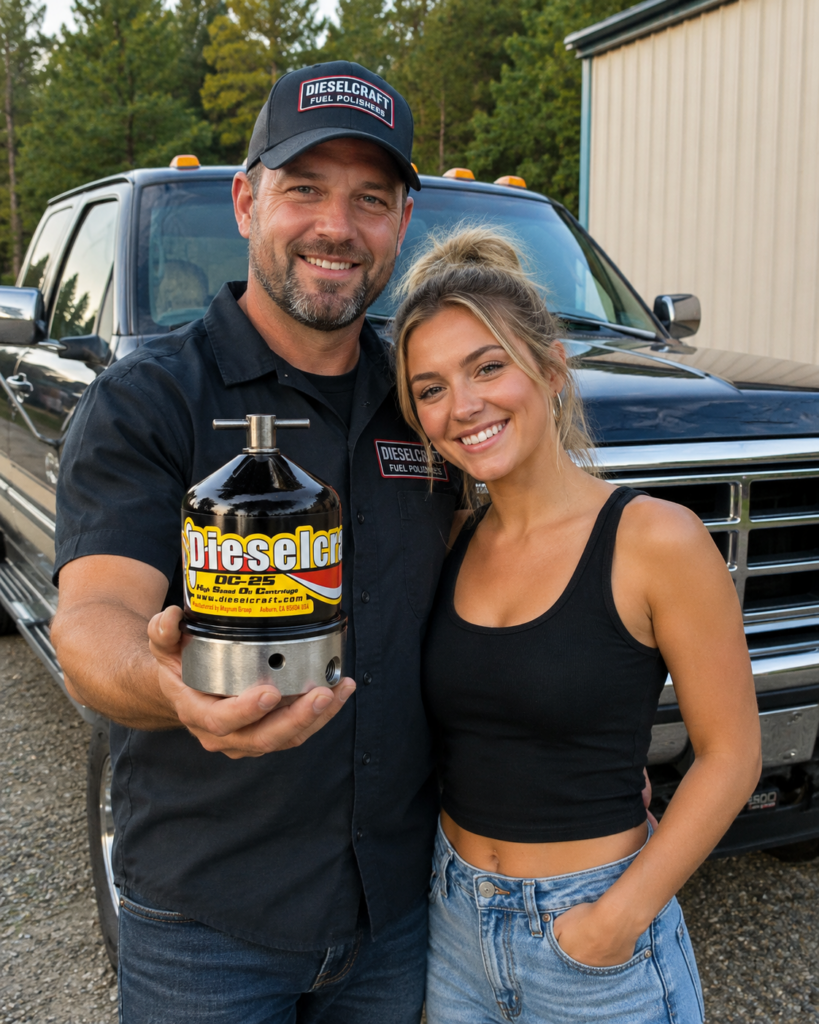
Customer Video:
Explanation #1:
Explanation #2:
Engine Oil Cleaning Systems for Diesel Engines
Standard oil filters remove large particles, but fine soot, dirt, and wear metals continue circulating through your engine. Dieselcraft oil centrifuges remove solid contamination down to approximately 1 micron to help reduce wear, extend oil life, and lower maintenance costs.
New Price…Sale Ends Soon…. Email for the current price.
Cleaner Oil
Removes fine abrasive particles that conventional full-flow filters often miss.
Lower Maintenance Cost
Helps extend oil change intervals when supported by proper oil analysis.
No Disposable Bypass Filters
The centrifuge collects contamination inside the rotor instead of relying on replaceable filter elements.
Why Standard Oil Filters Are Not Enough
Most engine wear particles are very small. Conventional oil filters are designed to protect oil flow, but they may allow fine abrasive particles to remain in circulation.
- Bearing wear
- Injector wear
- Turbocharger damage
- Reduced engine life
- Higher oil and filter costs
How the Dieselcraft Oil Centrifuge Works
The Dieselcraft centrifuge uses engine oil pressure to spin a rotor at high speed. Centrifugal force separates soot, dirt, wear metals, and fine solids from the oil stream.
Instead of trapping particles in a paper filter, the centrifuge removes contamination from circulation and holds it inside the rotor until service.
Real Oil Savings Example
If an oil change costs $300 and a truck needs four oil changes per year, annual oil maintenance is about $1,200.
Extending oil life by just 33% can reduce annual oil changes to about 2.6 per year, lowering the cost to about $792.
Estimated savings: over $400 per truck per year.
Best Applications
- Light, medium, and heavy-duty diesel trucks
- Pickup trucks including Duramax, Cummins, and Power Stroke engines
- Standby generators
- Marine diesel engines
- Agricultural equipment
- Mining and industrial machinery
Cleaning the Centrifuge
The Dieselcraft centrifuge has no disposable filter element. At service intervals, open the rotor, remove the collected solids, clean the parts, and reinstall the rotor.
Always follow safety procedures when working with hot oil and dispose of removed material according to local regulations.
Frequently Asked Questions
How is this different from a regular oil filter?
A standard oil filter traps contamination but can plug over time. A centrifuge separates fine solids from the oil and stores them inside the rotor.
How small of a particle can it remove?
Dieselcraft centrifuges remove solid contamination down to approximately 1 micron.
Can it extend oil change intervals?
Yes, in many applications oil drain intervals can be extended when proper oil analysis confirms the oil is still serviceable.
Does it use replaceable filters?
No. The rotor is cleaned during service, so there are no special bypass filter elements to keep buying.
Stop Throwing Away Usable Oil
Let Dieselcraft help you protect your engine, reduce wear, and calculate your return on investment.
West Coast: 530-613-2150
East Coast: 772-215-8087
Gulf Coast: 337-277-5417
Email: sales@dieselcraft.com






How the Dieselcraft Centrifuge Works
The Dieselcraft Centrifuge cleans engine oil using centrifugal force that is up to 2,000 times greater than gravity.
Instead of trapping contaminants like conventional filters, the centrifuge physically separates soot, dirt, wear metals, and fine particles from the oil stream. The contaminants are removed from circulation entirely rather than remaining suspended in the oil.
Unlike standard filters that eventually plug and restrict flow, the Dieselcraft Centrifuge maintains continuous cleaning performance while reducing particle contamination levels throughout the entire oil system.
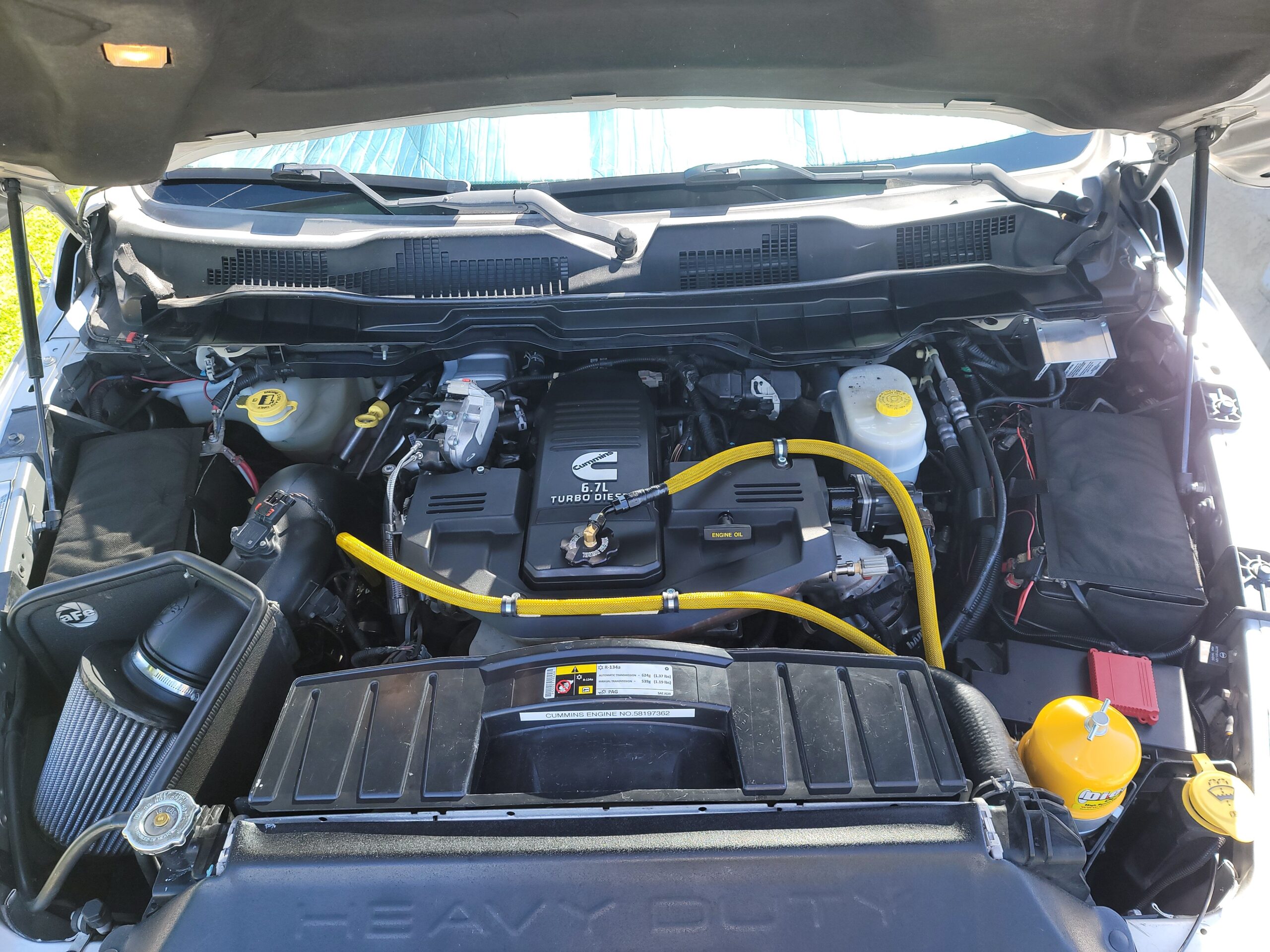
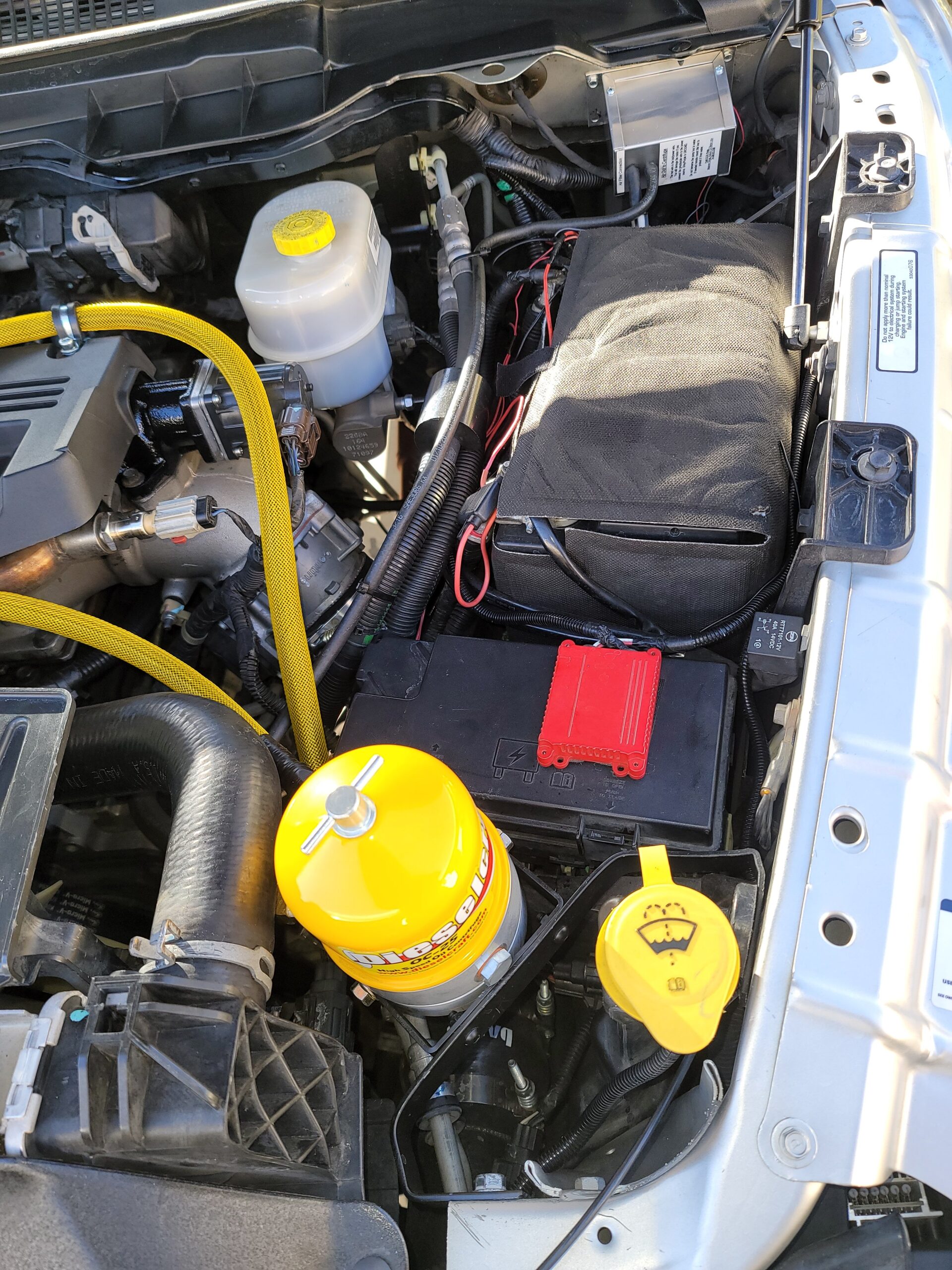
Model OC-25-Universal for ALL Duramax, Dodge Cummins12-24 valve, Ford 6-7.3 and more
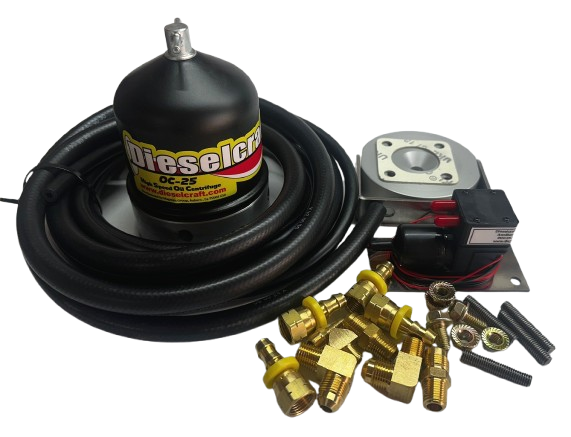
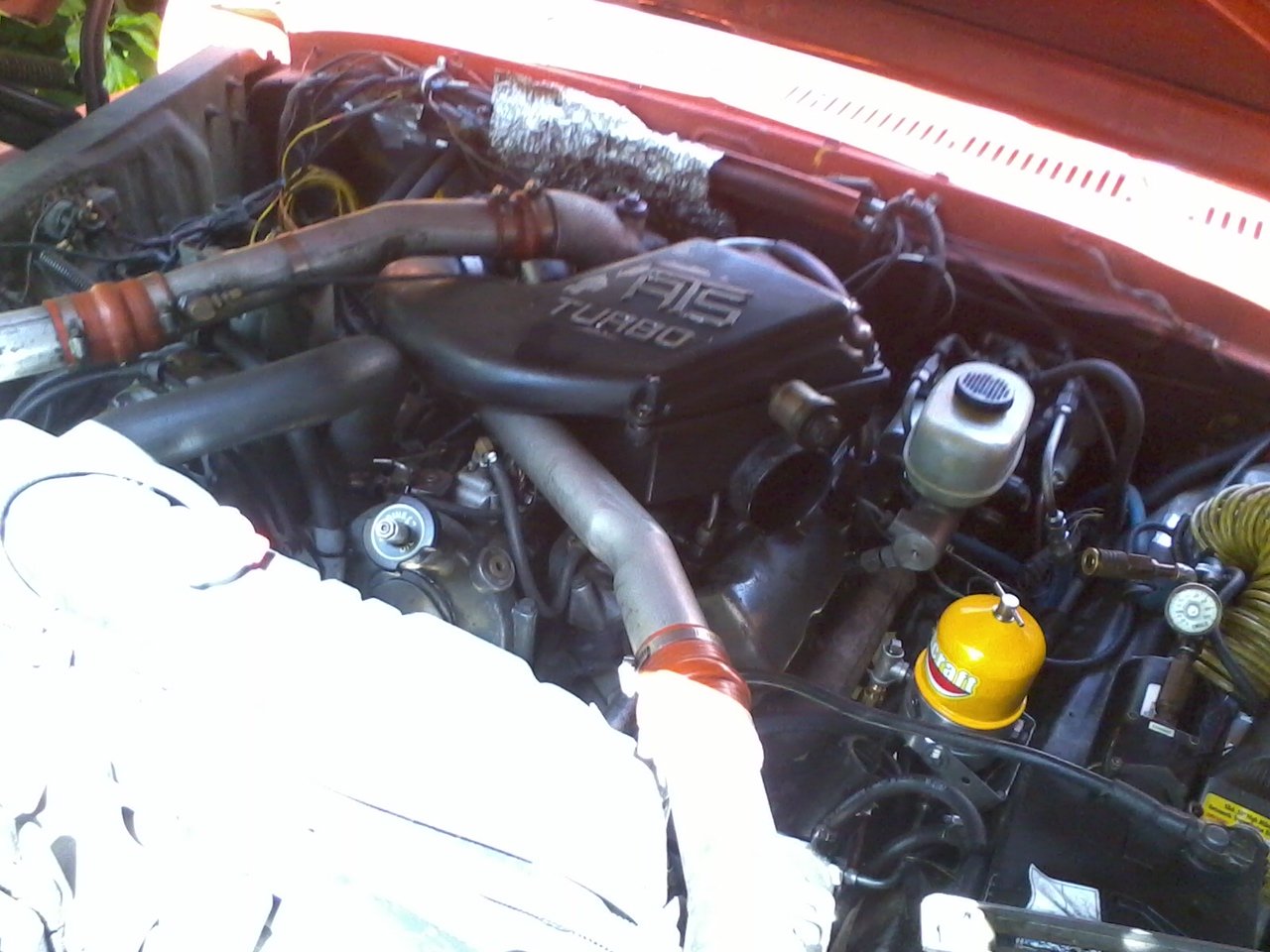
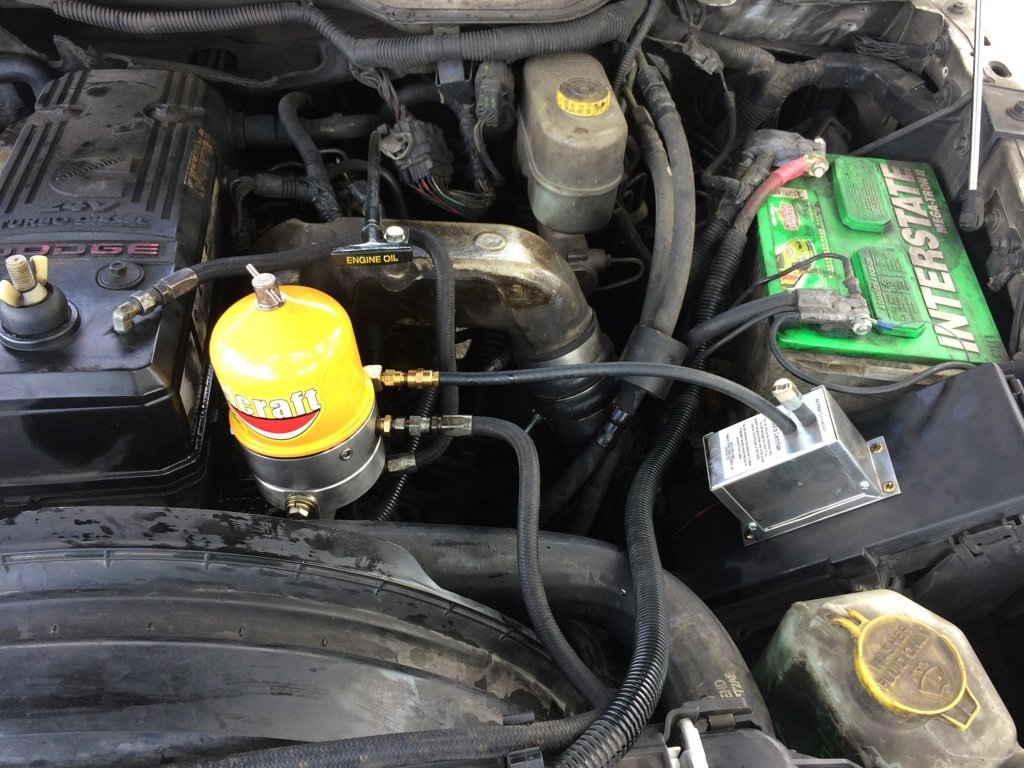
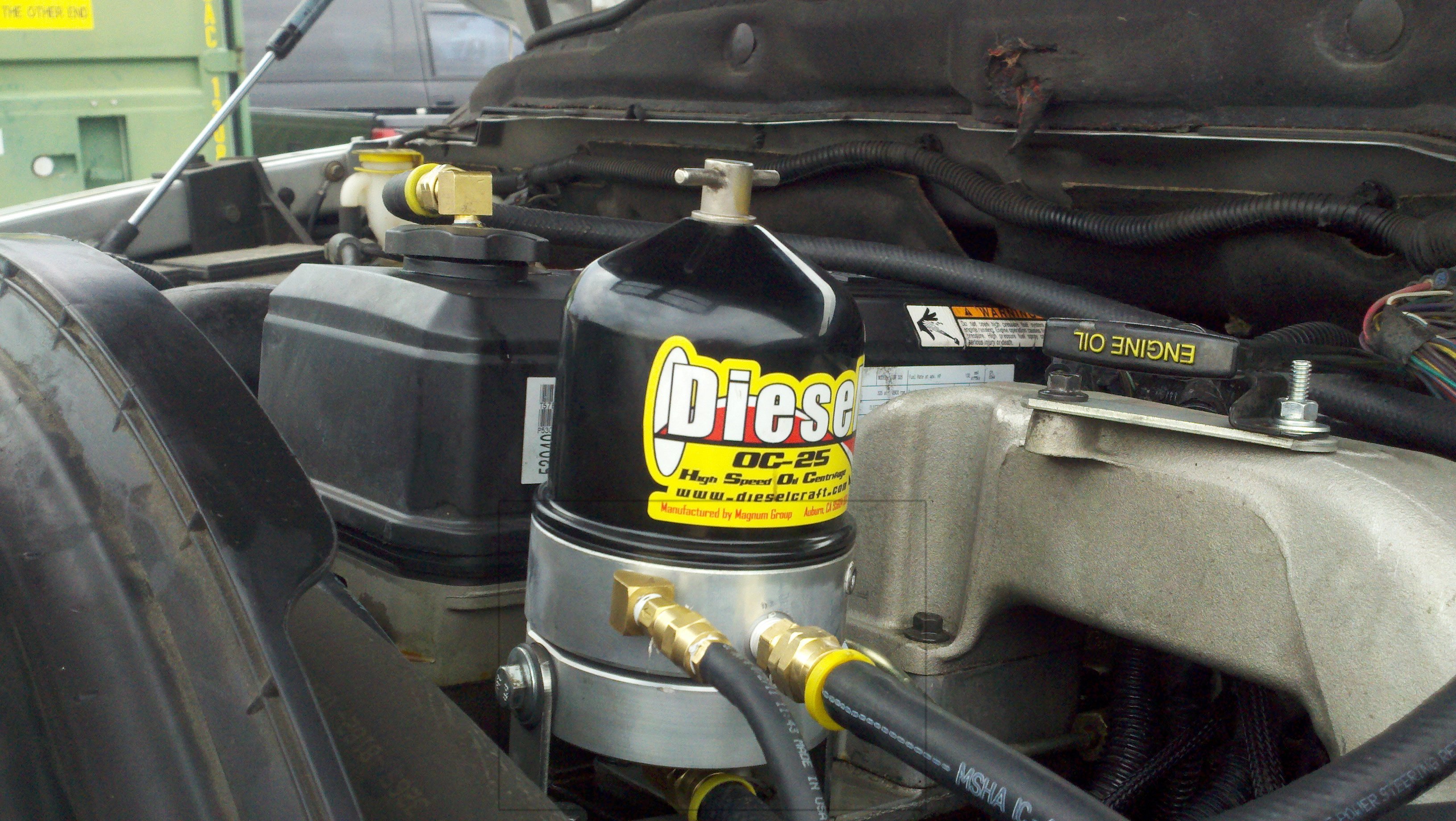
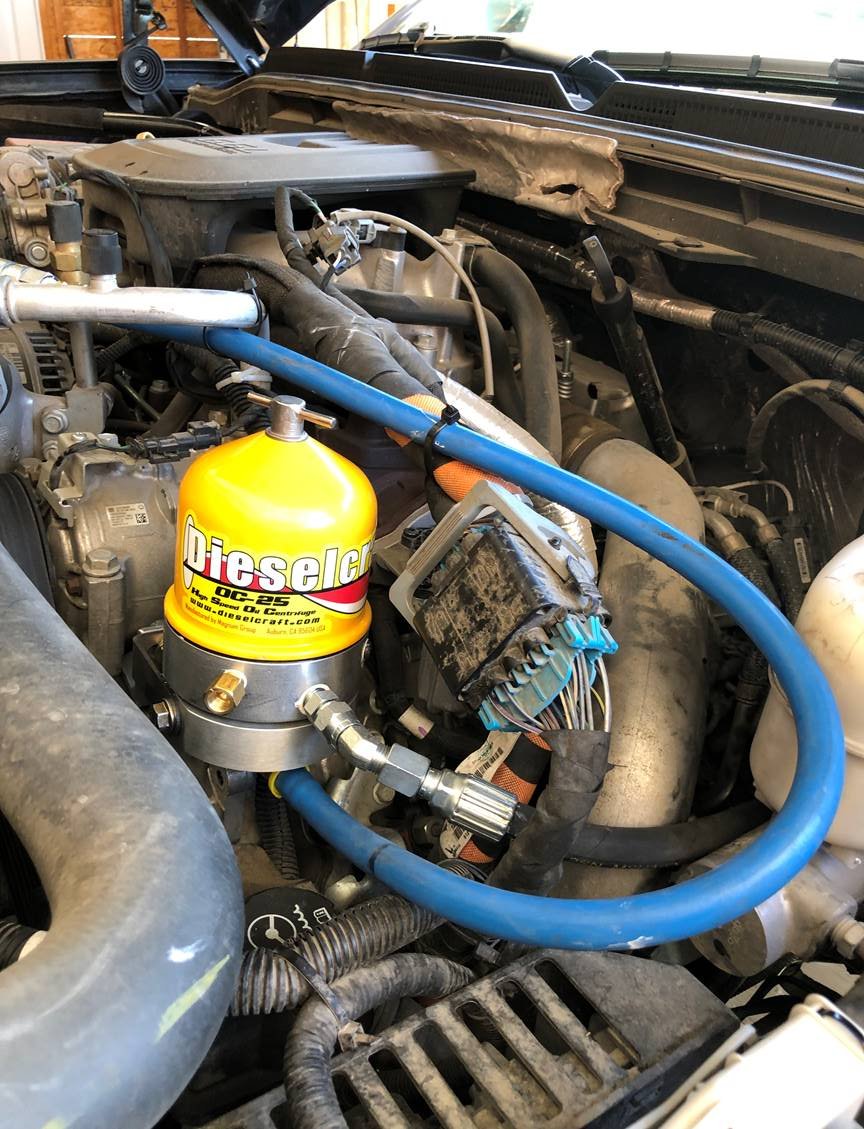
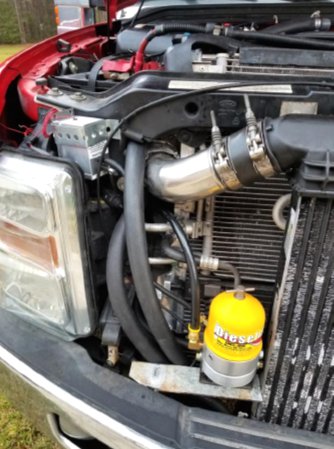
New Price…Sale Ends Soon…. Email for the current price.
Download Complete Centrifuge Install Data
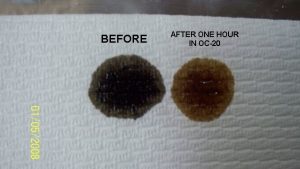
During this 12,500-mile interval, more than half a pound (8.5oz) of soot could enter the oil.
Cleaning the Dieselcraft Centrifuge
CAUTION: Hot oil can be dangerous and may burn the skin. Wear proper protective clothing when working with hot engine parts and hot oils. Avoid unnecessary skin contact with oil.
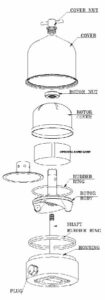
The Dieselcraft Centrifuge is very simple. It does not require any expendable parts or filters.
At every service period, you just have to open the centrifuge rotor, remove all dirt collected in the rotor then re fit the rotor and centrifuge cover.
- Unscrew top nut and remove the centrifuge cover.
- Lift the rotor completely off the shaft quickly and allow it to drain into an appropriate container.
- Prepare to unscrew rotor nut. Place the rotor, nozzles down over a 1-2” wide wooden block. You will see the block will stop the rotor from turning. Unscrew the rotor nut. The rotor nut should not be opened by hand.Unscrew it with a small adjustable wrench. Never grip the rotor nut tightly in clamping device like a bench vice. It may damage the rotor body permanently.
- Remove rotor cover by use of a RUBBER MALLET. Hold the rotor in one hand by gripping the cover so the rotor nut shaft is UP and tap the shaft lightly. This will cause the two part to separate. DO NOT USE A HARD FACED HAMMER. The top bushing can be damaged if hammered on.
- Remove the deflector that is under the cover.
- Remove the dirt collected from inside the rotor cover by the use of a plastic or dull metal scraper. Clean all the rotor parts thoroughly.
The dirt removed from engine oil is considered Hazardous Material. Dispose of it in the proper manner based your the laws of your county or state.
Re-Assembly
Always ensure that the arrow marks on rotor cover and rotor are matched after assembling the rotor. The rotor body is dynamically balanced. Mismatch of arrow marks on rotor cover and rotor will result in excessive vibration.
Do not over tighten the top nut. Snug plus 1/2 turn is all that is needed. Over tightening top nut will damage the centrifuge permanently.
Do not drop, hammer upon, distort or force during disassembly or reassembly. You may damage the device and void the warranty.
More Frequently Asked Questions
Centrifugal oil cleaners use engine oil pressure to spin a rotor at high speed (often thousands of rpm). The centrifugal force generated is thousands of times greater than gravity, forcing solid contaminants to the inside walls of the rotor where they are collected and later removed manually.
A standard paper or full-flow oil filter traps contaminants but eventually plugs and reduces oil flow over time. A centrifuge actively separates contaminants from the oil stream and holds them independently, maintaining a more consistent cleaning performance and allowing for extended oil life.
Dieselcraft’s oil centrifuge units remove particles down to about 1 micron or smaller, far beyond the typical capability of conventional full-flow oil filters that trap particles around 25 microns.
The system does not begin operating until engine oil pressure reaches 28 PSI. This ensures the engine has established proper lubrication before the centrifuge engages.
At 28 PSI, the rotor spins at approximately 3,000 RPM, generating about 375 g’s of centrifugal force.
At 40 PSI, rotor speed increases to roughly 4,700 RPM, producing over 900 g’s of cleaning force.
NO 3/4 will not work. The system will operate correctly as long as the vertical drop on the return line is 12 inches or more and the return line is 1 inch ID. If the drop is less than 12 inches, the return line must be increased to 1 1/4 inch in diameter.
Any back pressure in the return line will cause the centrifuge to stall and stop functioning. The return port must discharge into an open, unrestricted space with zero back pressure.
The oil pressure drives the centrifuge rotor and when the oil leaved the rotor the pressure is Zero. So the air pump is used to add pressure inside the centrifuge to create pressure to return the oil to the engine. The centrifuge can be below the return point by 3 feet if needed.
The pump is very quiet compared to the engine noise. The pump MUST be kept dry so under the dash is fine
Look above the filter housing there is a pipe plug that is used for the oil supply or find the oil pressure sending unit and “T” into it. The kit comes with hoses and fittings to compete most jobs.
Recent Comments